


What Is The Difference Between Keratin And Hydrolyzed Keratin?
Jun 29, 2026
Leave a message
To easily understand the difference between keratin and hydrolyzed keratin, you can think of human hair as a solid brick wall. Natural keratin acts as complete, large bricks that build up the wall, while hydrolyzed keratin is fine, crushed brick powder made from the same material. Though they are chemically identical, their different molecular sizes create completely different performance and effects in hair care. Natural keratin is a large, high-molecular protein that forms the natural structure of human hair, nails and skin. Healthy hair is fully filled with complete keratin molecules, which support the hair structure, maintain toughness, elasticity and firmness, and prevent dryness and breakage.
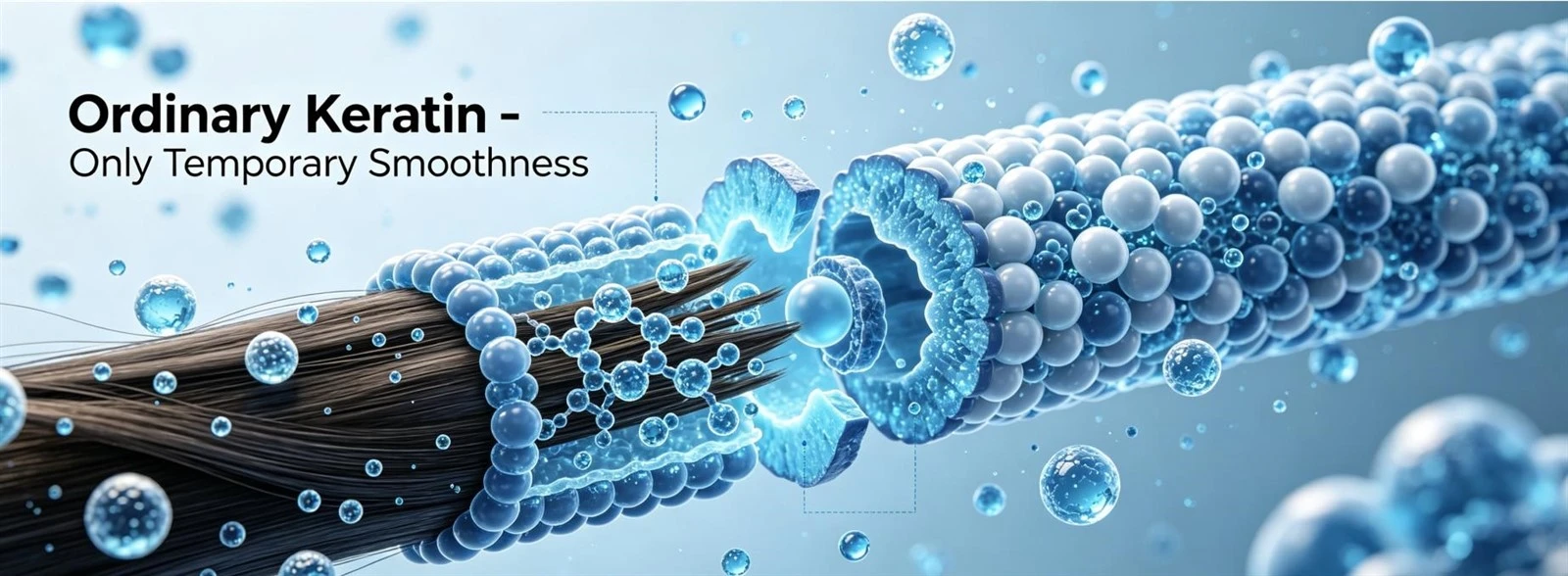
However, daily damage from perming, dyeing, high-temperature styling and sun exposure will destroy the hair's outer cuticles. Once the cuticles lift and crack, the large native keratin molecules inside leak out, leaving hollow gaps in the hair strands. As a result, hair becomes dry, brittle, frizzy and prone to split ends. The biggest downside of ordinary keratin is its oversized molecular structure. When applied to damaged hair, these large molecules cannot penetrate the hair shaft at all. They can only lightly attach to the outermost hair surface, bringing only temporary smoothness. After one or two washes, the keratin layer is completely rinsed away. It cannot fill internal hollow gaps, repair damaged cuticles or strengthen fragile hair, so it fails to solve fundamental hair problems. For this reason, pure natural keratin is rarely used alone in professional hair care products.
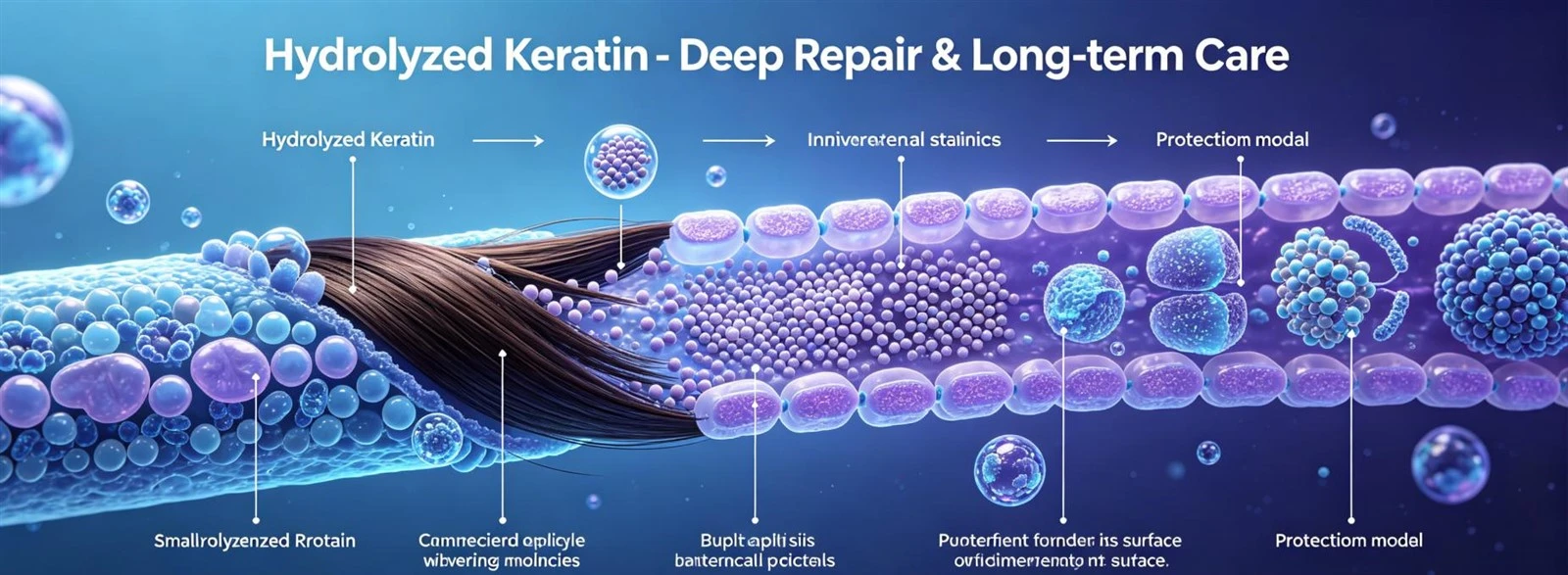
In contrast, hydrolyzed keratin is a processed small-molecule protein. Manufacturers break down large, intact keratin molecules through a professional hydrolysis technology, splitting them into tiny, lightweight molecular fragments. This special processing completely changes its usability. These fine molecules are small enough to easily penetrate lifted cuticles and fill the microscopic hollow spaces inside damaged hair strands. Some hydrolyzed keratin stays inside the hair to replenish lost protein, rebuild internal support structures and improve hair toughness. The rest fills uneven cuticle gaps, smooths frizzy hair and forms a thin, breathable protective film on the hair surface to lock in moisture and block external heat and dust damage. In terms of scalp adaptability, hydrolyzed keratin is far more friendly. It is light, non-sticky and non-greasy, suitable for all scalp types, including oily and sensitive scalps, and will not weigh down fine or limp hair. Natural large-molecule keratin is thick and heavy, which easily causes hair clumping, greasiness and flatness after application. Many people mistakenly believe the two ingredients are the same simply because they share similar names. In fact, native keratin is the inherent structural material of healthy hair, which is difficult to replenish through external application after loss. Hydrolyzed keratin is a specially modified repair material designed for damaged hair. It is the only keratin ingredient that can be effectively absorbed and utilized by hair strands. Overall, ordinary large-molecule keratin only offers temporary surface smoothing with no deep repair ability. Hydrolyzed small-molecule keratin achieves real internal filling, structural reinforcement and long-term hair care. All professional reparative hair care products adopt hydrolyzed keratin instead of ordinary keratin. For anyone with dry, frizzy, damaged or over-processed hair, choosing hydrolyzed keratin products is the only effective way to fundamentally improve hair quality.
Send Inquiry