


Does Astaxanthin Lower CRP?
Jul 16, 2026
Leave a message
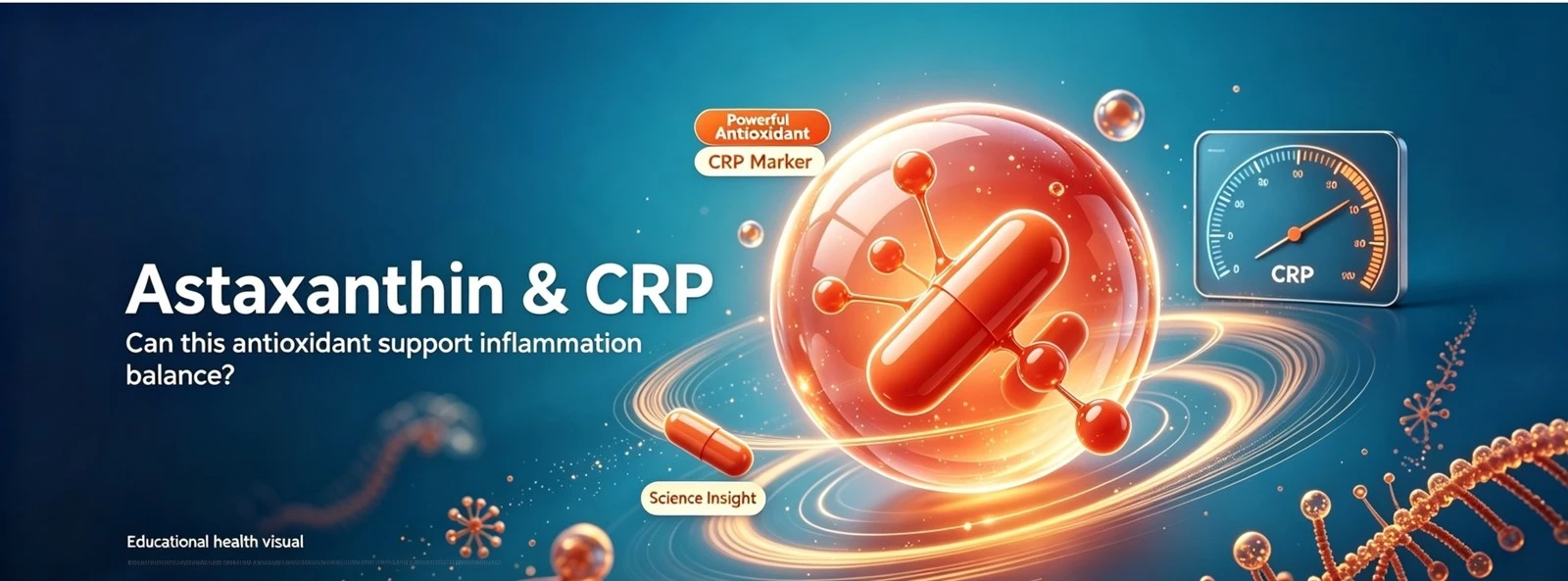
You've likely come across astaxanthin before. Touted as the "king of antioxidants", this natural compound has become extremely popular in the health supplement industry, with brands frequently highlighting its powerful anti-inflammatory and antioxidant benefits. One of the most common claims surrounding astaxanthin is that it can bring down C-reactive protein (CRP) levels in the human body. But is this really backed up by solid science? Let's sort through the actual research to find out.
First, let's clear up what CRP actually is. It's basically your body's inflammation meter-when there's trouble, your liver cranks out more of this protein. High CRP numbers usually point to infection, simmering low-grade inflammation, or a higher chance of heart problems down the road. So it totally makes sense why so many folks turn to astaxanthin, hoping it'll help bring that number down and keep inflammation in check.
What do the studies say? Conclusions are not consistent.
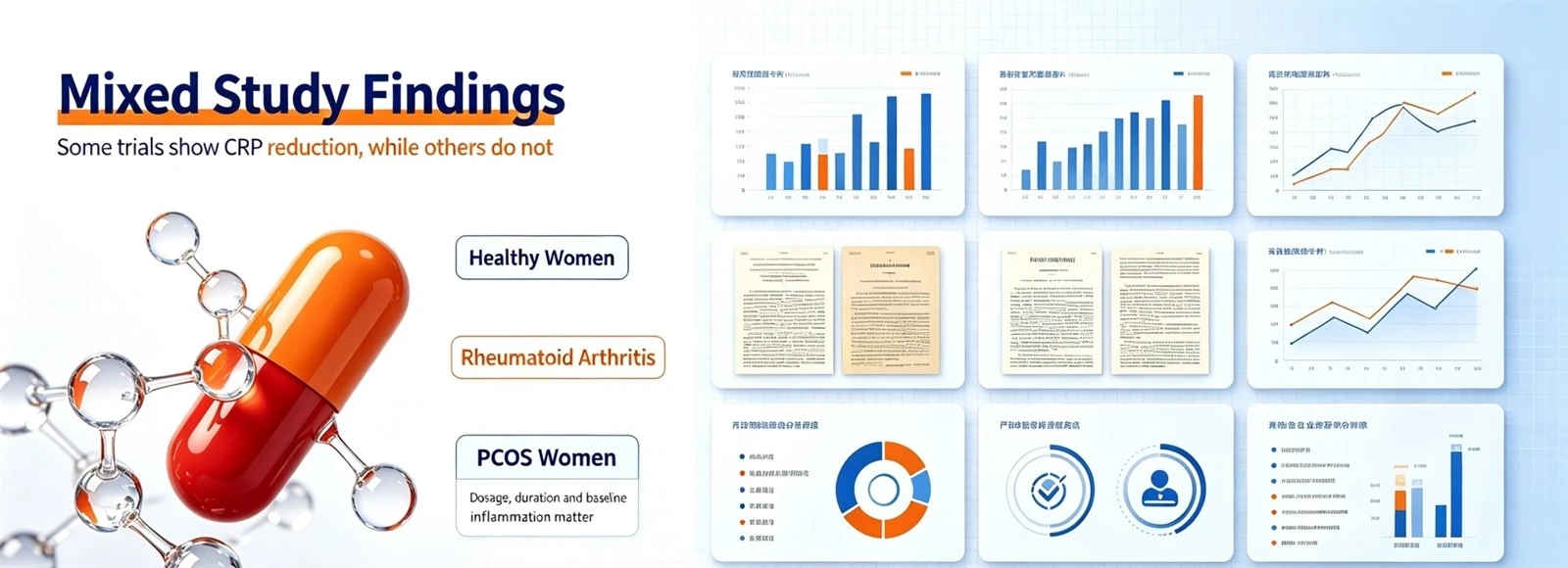
Some studies do show that astaxanthin has a positive effect on lowering CRP. For example, one study on healthy women found that CRP levels decreased after eight weeks of astaxanthin supplementation. Some review articles also mention a "negative correlation" between astaxanthin and elevated CRP levels, meaning that astaxanthin supplementation may help reduce CRP. In some animal experiments, astaxanthin has also shown an effect in lowering CRP; for example, a study on diabetic rats found that astaxanthin significantly reduced plasma CRP levels.
However, the situation is not one-sided. Other studies have reached different conclusions. A randomized controlled trial published in 2025 involving patients with rheumatoid arthritis, who took 20 mg of astaxanthin daily for eight weeks, showed improvements in disease activity scores and erythrocyte sedimentation rate (ESR), but after excluding other influencing factors, the decrease in CRP levels was not statistically significant. This means that the effect of astaxanthin on CRP may be unclear in this study.
More notably, a study of women with polycystic ovary syndrome (PCOS) showed that taking 12 mg of astaxanthin daily for eight consecutive weeks resulted in almost no change in CRP levels. Similarly, a study of patients with heart failure also showed that astaxanthin had no statistically significant effect on CRP (p=0.152).

Why are the results contradictory?
This kind of variability is actually common in nutritional supplement research, and it stems from several key factors.
First, we need to look at the research subjects - healthy people, patients with rheumatoid arthritis, and women with PCOS. The basic inflammatory levels of these three types of people are not on the same starting line at all.Everyone's body has a different "initial setting", so the response to astaxanthin naturally varies. Ultimately, this is reflected in the data as inconsistent results.
Secondly, dosages and treatment durations vary across different research projects. Some trials employ a daily dose of 20 mg, while others use only 12 mg, and the length of the supplementation period also differs between studies. These inconsistent experimental parameters directly influence the final results.
Finally, individual physiological differences play a significant role. People's ability to absorb, metabolize, and utilize astaxanthin varies, leading to natural differences in the supplement's impact on inflammatory markers such as C-reactive protein (CRP).
Authoritative health bodies have also weighed in on this debate.
EFSA's assessment indicates that there is currently insufficient evidence to prove that astaxanthin can reduce CRP. This does not mean that astaxanthin is useless: it is an effective antioxidant and may also have anti-inflammatory effects. Some studies have seen a decrease in CRP, but these studies are diverse, have small samples, and the results are inconsistent. Larger and more standardized randomized controlled studies are needed for confirmation. It is more reliable to view this efficacy with caution before the result is clear.
Astaxanthin is widely recognized as a powerful antioxidant and may have anti-inflammatory effects. Some studies have observed a decrease in CRP, but the current evidence is insufficient to assert that it can definitely lower CRP.Before more high-quality research arrives, it is advisable to remain rational and cautious.
Send Inquiry